Communicating With Non-Verbal Elderly Patients:Practical Tips for Caregivers

iSavta | 02.10.2026
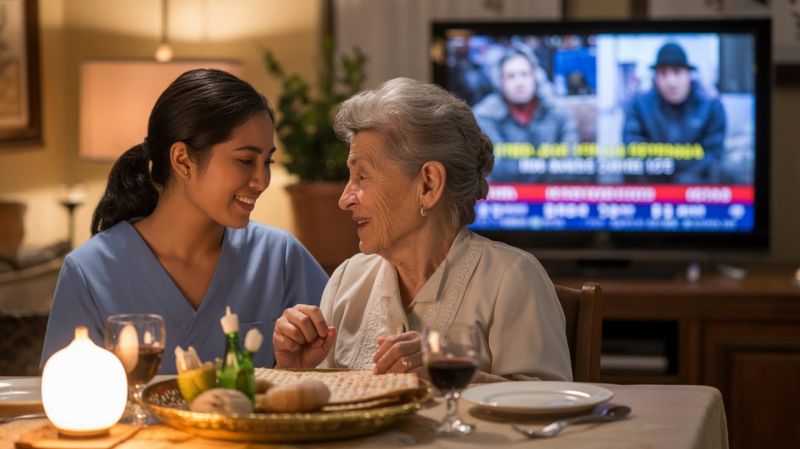
Communication is an important part of caregiving. It helps caregivers understand what an elderly personneeds, how they are feeling, and whether something is wrong.
But communication is not always about speaking.
Some elderly patients may be unable to communicate verbally because of dementia, stroke, Parkinson'sdisease, a neurological condition, hearing problems, illness, or physical limitations. Others may understandeverything around them but have difficulty finding the words to respond.
For caregivers, learning how to communicate with a non-verbal elderly patient can make daily care easierand help the person feel respected, safe, and understood.
What Does Non-Verbal Communication Mean?
A person who is non-verbal may have little or no ability to communicate using spoken words. However, thisdoes not necessarily mean they cannot communicate.
They may use:
Facial expressions
Eye contact
Hand gestures
Body movements
Sounds or vocalizations
Writing or drawing
Pointing
Communication boards
Mobile phones or tablets
Changes in behavior
A caregiver's job is to pay attention to these signals and learn what they may mean.
Every person communicates differently, so getting to know the individual's usual behavior is important.
1. Be Patient and Give Them Time
One of the biggest mistakes caregivers can make is rushing a person who has difficulty communicating.
Ask a question and give the elderly person enough time to respond.
They may need several seconds—or longer—to understand the question, process it, and find a way toanswer.
Avoid immediately answering for them or repeatedly asking the same question.
Instead, remain patient and give them time.
A calm caregiver can make communication much less stressful.
2. Speak Clearly and Simply
When talking to a non-verbal elderly patient, use simple and direct language.
Instead of asking:
"What would you like to have for breakfast this morning?"
try:
"Would you like eggs?"
Then give the person time to respond.
For some patients, asking questions that can be answered with a simple "yes" or "no" may be easier.
However, do not assume that a person who cannot speak cannot understand complex information. Adjustyour communication based on the individual's abilities.
3. Pay Attention to Facial Expressions
Facial expressions can provide important clues.
A smile may indicate comfort or happiness. A frown or grimace may indicate discomfort or pain.
A person may also look away, close their eyes, become tense, or show signs of distress when something iswrong.
However, caregivers should avoid assuming that one expression always has the same meaning.
Spend time learning the person's usual behavior and look for changes.
4. Watch Body Language
Body movements can also communicate needs.
For example, an elderly person may:
Point toward something they want
Push something away
Reach for an object
Become restless when uncomfortable
Move toward something they want
Pull away when they are frightened or uncomfortable
Pay attention to what happens before and after a particular behavior.
Over time, caregivers may begin to recognize patterns.
5. Use Gestures and Demonstrations
If speaking is difficult, demonstrate what you mean.
For example, if you want the person to get dressed, show them the shirt or pants rather than simply givinga verbal instruction.
If you are offering food, show them the two choices.
You can also use simple hand gestures, pointing, or facial expressions.
Combining speech with visual information can make communication easier.
6. Give Choices Instead of Open-Ended Questions
A person who cannot speak may find it difficult to answer an open-ended question.
Instead of asking:
"What do you want to eat?"
try:
"Do you want chicken or fish?"
You can show both options and allow the person to point, look at one, nod, or use another form ofcommunication.
Giving two or three appropriate choices can help the elderly person maintain a sense of control over theirdaily life.
7. Learn Their Personal Communication System
Some non-verbal patients develop their own ways of communicating.
They may use a particular hand gesture for "yes," another for "no," or a certain sound when they needsomething.
Ask family members or other caregivers whether the person already has an established communicationsystem.
Write down important signals if necessary.
A simple list can be useful for caregivers who are new to the patient.
8. Consider Communication Tools
Technology and simple communication aids can help some non-verbal elderly patients express themselves.
Depending on their abilities, useful tools may include:
Picture cards
Alphabet boards
Communication boards
Notebooks
Tablets or smartphones
Speech-generating devices
Simple yes/no cards
A healthcare professional, speech-language therapist, or other qualified specialist may be able torecommend an appropriate communication method.
The best tool is the one the person can use comfortably and consistently.
9. Reduce Background Noise
Communication can become much harder when there is a lot of noise.
Turn off the television or reduce background sounds when speaking with the elderly person.
Make sure they can see your face.
If the person has hearing or vision difficulties, position yourself where they can see and hear you as clearlyas possible.
A quiet environment can make communication easier and less frustrating.
10. Never Assume They Do Not Understand
One of the most important things caregivers should remember is:
Being unable to speak does not necessarily mean being unable to understand.
Continue speaking to the elderly person respectfully.
Do not talk about them as though they are not present.
Avoid discussing private information in front of them simply because they cannot respond verbally.
Include them in conversations and decisions whenever possible.
They deserve to be treated as an adult and as an active participant in their own care.
11. Watch for Changes in Behavior
For someone who cannot communicate verbally, changes in behavior may be an important sign thatsomething is wrong.
Sudden changes such as increased agitation, unusual sleepiness, withdrawal, restlessness, refusal to eat, orchanges in facial expression may indicate pain, illness, discomfort, fear, or another problem.
Caregivers should report significant or sudden changes to the appropriate healthcare professional.
Do not automatically assume that unusual behavior is simply part of dementia or old age.
Communication Can Prevent Frustration
Imagine needing something but being unable to explain what you need.
This can be frightening and frustrating.
A patient may become angry, cry, refuse care, or behave unusually because they cannot communicate whatis wrong.
Instead of immediately viewing this behavior as difficult or uncooperative, ask yourself:
"What might this person be trying to tell me?"
They could be hungry, thirsty, in pain, tired, frightened, uncomfortable, or simply trying to express apreference.
Looking for the reason behind the behavior can lead to better care.
Treat Communication as a Two-Way Process
Good communication with a non-verbal elderly patient requires patience, observation, and respect.
Do not focus only on getting the person to respond. Focus on understanding them.
Watch their face and body language. Give them time. Use simple words, gestures, pictures, and appropriatecommunication tools. Learn their individual signals and involve them in everyday decisions.
Most importantly, remember that a person's inability to speak does not take away their ability to feel,understand, make choices, or deserve respect.
As a caregiver, taking the time to communicate in a way the elderly person can understand can build trustand make daily care more comfortable for both of you.